SHIELD and the EARLYSCAN Cluster
Working together to improve early detection of heritable cancers in Europe
SHIELD is part of EARLYSCAN (Early Screening & Hereditary Cancer Awareness Network), a new European project cluster launched under the EU Mission on Cancer.
EARLYSCAN brings together three Horizon Europe–funded projects — SHIELD, DISARM, and PREDI-LYNCH — with a shared goal: to improve prevention, early detection, and surveillance for people with inherited cancer risk across Europe.
Rather than working in isolation, the projects collaborate to align methods, share knowledge, and accelerate the translation of research into real clinical practice.


Why EARLYSCAN matters
People with inherited genetic risk represent a major opportunity for earlier cancer detection.
It is an end-to-end pathway, involving:
- identifying people at high risk
- recruiting and supporting them in surveillance programmes
- testing and monitoring over time
- returning results and ensuring appropriate follow-up
EARLYSCAN addresses this full pathway by coordinating research across countries, cancer types, and health systems, helping ensure that evidence is comparable, scalable, and ready for real-world use.
The projects in the EARLYSCAN cluster
SHIELD – Pancreatic cancer
SHIELD focuses on the early detection and surveillance of pancreatic ductal adenocarcinoma (PDAC) in individuals with familial or genetic risk.
The project is validating an innovative blood-based multiplex immunoassay within a multi-centre European study and piloting early detection programmes in several countries. SHIELD works closely with clinicians, screening authorities, and patient organisations to support future integration into healthcare systems.
DISARM – Ovarian cancer
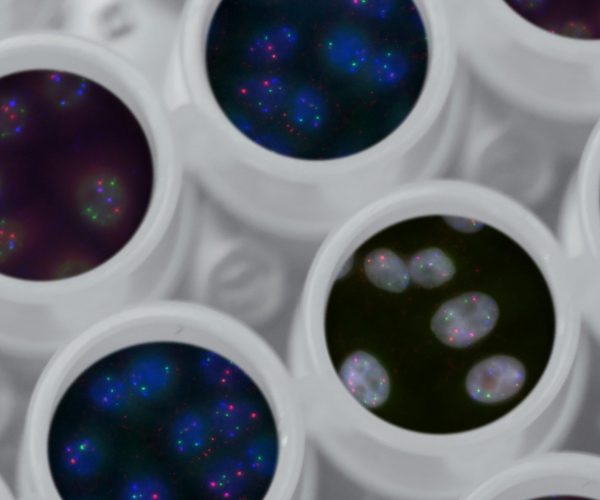
DISARM addresses hereditary ovarian cancer, one of the most lethal cancers affecting women.
The project combines improved risk assessment with affordable liquid biopsy approaches for early detection, validated across multiple European countries. DISARM also focuses on practical implementation, adoption in healthcare systems, and reducing inequalities in access to early detection.

PREDI-LYNCH – Lynch syndrome
PREDI-LYNCH targets early cancer detection in people with Lynch syndrome, the most common hereditary cancer predisposition.
Using non-invasive liquid biopsy technologies combined with artificial intelligence, the project aims to detect cancers at an early stage across several Lynch-associated cancer types. PREDI-LYNCH places strong emphasis on ethical, social, and healthcare system considerations.
How SHIELD works with DISARM and PREDI-LYNCH
Through EARLYSCAN, SHIELD collaborates closely with the other projects to create shared, reusable assets that go beyond any single cancer type, including:
- harmonised definitions of high-risk populations and clinical pathways
- shared approaches to recruitment, follow-up, and reporting outcomes
- aligned ethics and GDPR-compliant practices
- common frameworks for data reuse, interoperability, and responsible AI
- coordinated communication and dissemination activities
This collaboration helps ensure that results from SHIELD can be compared with, learned from, and scaled alongside results from ovarian cancer and Lynch syndrome research.
A coordinated European approach
By working as a cluster rather than as isolated projects, EARLYSCAN strengthens the impact of EU investment and supports the development of more coherent European standards for early detection and surveillance of heritable cancers.
Together, SHIELD, DISARM, and PREDI-LYNCH aim to:
- accelerate clinical uptake of early detection strategies
- support evidence-based policy and guideline development
- improve outcomes for individuals and families at increased genetic risk
EARLYSCAN’s joint work plan will continue to evolve, with shared results and tools made available to the wider research, clinical, and policy communities.
Promotional Materials
EARLYSCAN Brochure